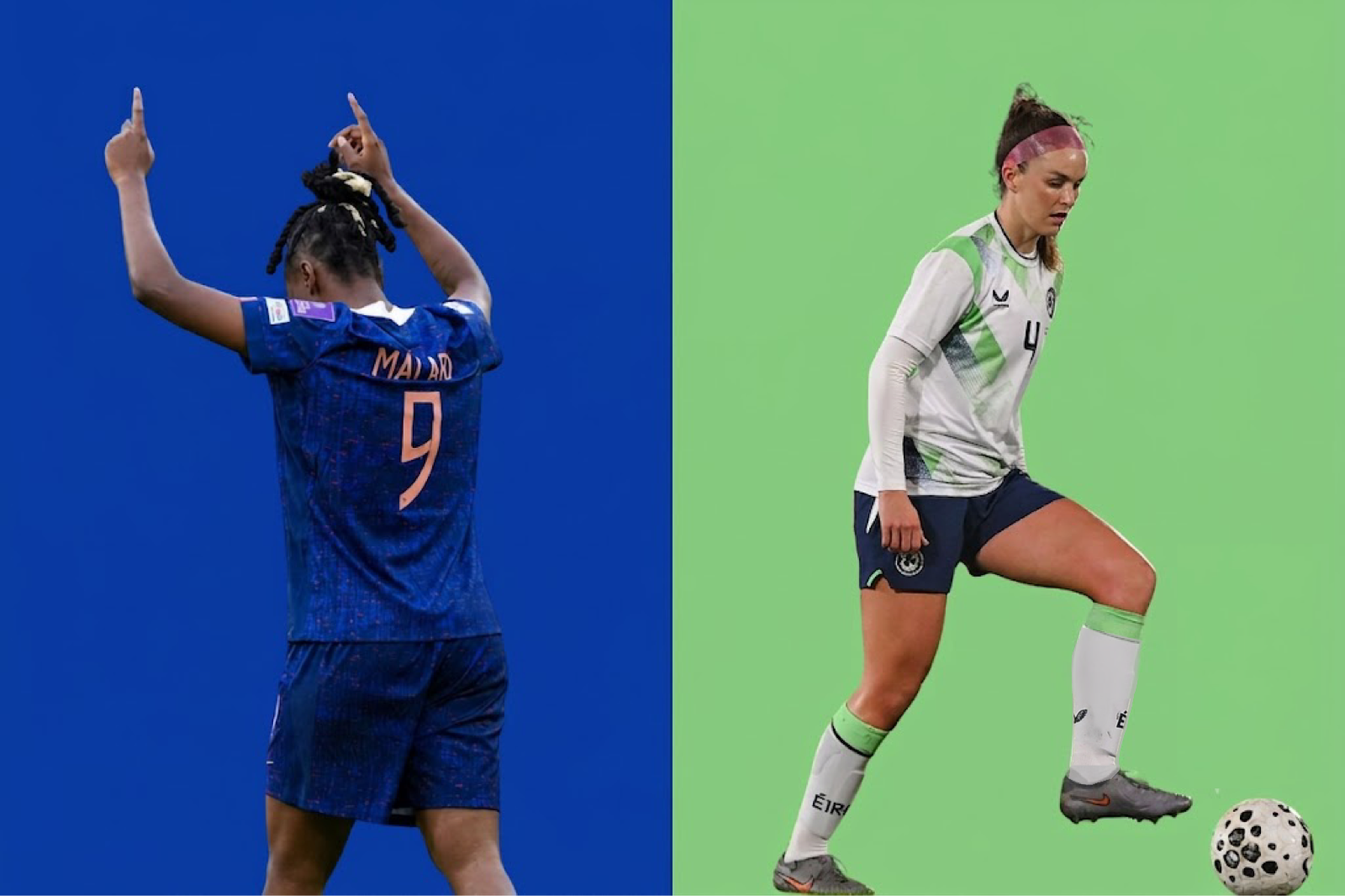
In the modern game, fullbacks are made to do it all. From defensive actions to attacking movements, the fullback has become the most versatile and exciting position on the football pitch.
The Halfway Line examines the evolution of the fullback position by examining two key case studies in England’s Women’s Super League.
The History of the Fullback
Defined by Wikipedia, the fullbacks “locate the holding wide positions and traditionally stay in defence at all times, until a set-piece. There is one full-back on each side of the field except in defences with fewer than four players, where there may be no full-backs and instead only centre-backs”
In early association football, the fullbacks were what we may now define to be centre-backs, located at the base of the ‘pyramid’. By the 1890s, the English football pyramid was widely recognised to be a 2-3-5 set-up (think Jonas Eidevall playing against Aston Villa at Emirates Stadium in the 2023/24 season). This was a time before centre-halfs, where fullbacks were sitting at the heart of defence. Forwards were made to push on, and attacking football was the only appropriate style.

Around the time of the 1930s, the pyramid morphed into more of a 3-2-5 shape, with an inclusion of a third player at the centre of defence. This meant that the two fullbacks were pulled into a slight wider position, but still remained central.
The fullback role took a greater turn in the modern game, where we most commonly see teams lineup in the 4-3-3, or the 4-4-2. This saw the fullbacks drop into the channel, playing wider roles to match up directly with opposition wingers.
A modern day fullback has the hardest job of the lot, forced to be extensively versatile in fear of falling behind. They must be fit to defend, whilst also maintaining the stamina and discipline in order to press on offensively. Fullbacks are the glue in transition, stringing together the defence with the midfield, whilst also operating in tandem with the wide attacking wingers.
Former Barcelona men’s star Jordi Alba is a prime example of a defensive player with attacking strength, leading the line for the new wave of offensive fullbacks. Liverpool’s Trent Alexander-Arnold showcases similar traits, while Arsenal’s Ben White is an illustration of a central-defender-turned-fullback, meaning that he brings a different bag of attributes to the position.
In the women’s game, the evolution has followed a similar trajectory. Some may even argue that the fullback position boasts even greater attacking talent than in the men’s game.
The Evolving Model of the WSL Fullback
England’s Women’s Super League (WSL) is a golden testing model when it comes to examining the evolution of the fullback position inside of the global game. As far as attacking wingbacks go, the WSL is full to the brim of them.
The top-flight of English women’s football has a long list of fullbacks with attacking attributes. Gone are the days of a reserved back four, in are the days of a streaming defender who touches every blade of ground in the channel.
We analyse two case studies of modern day fullbacks in the women’s game to highlight the evolution of the beloved position.
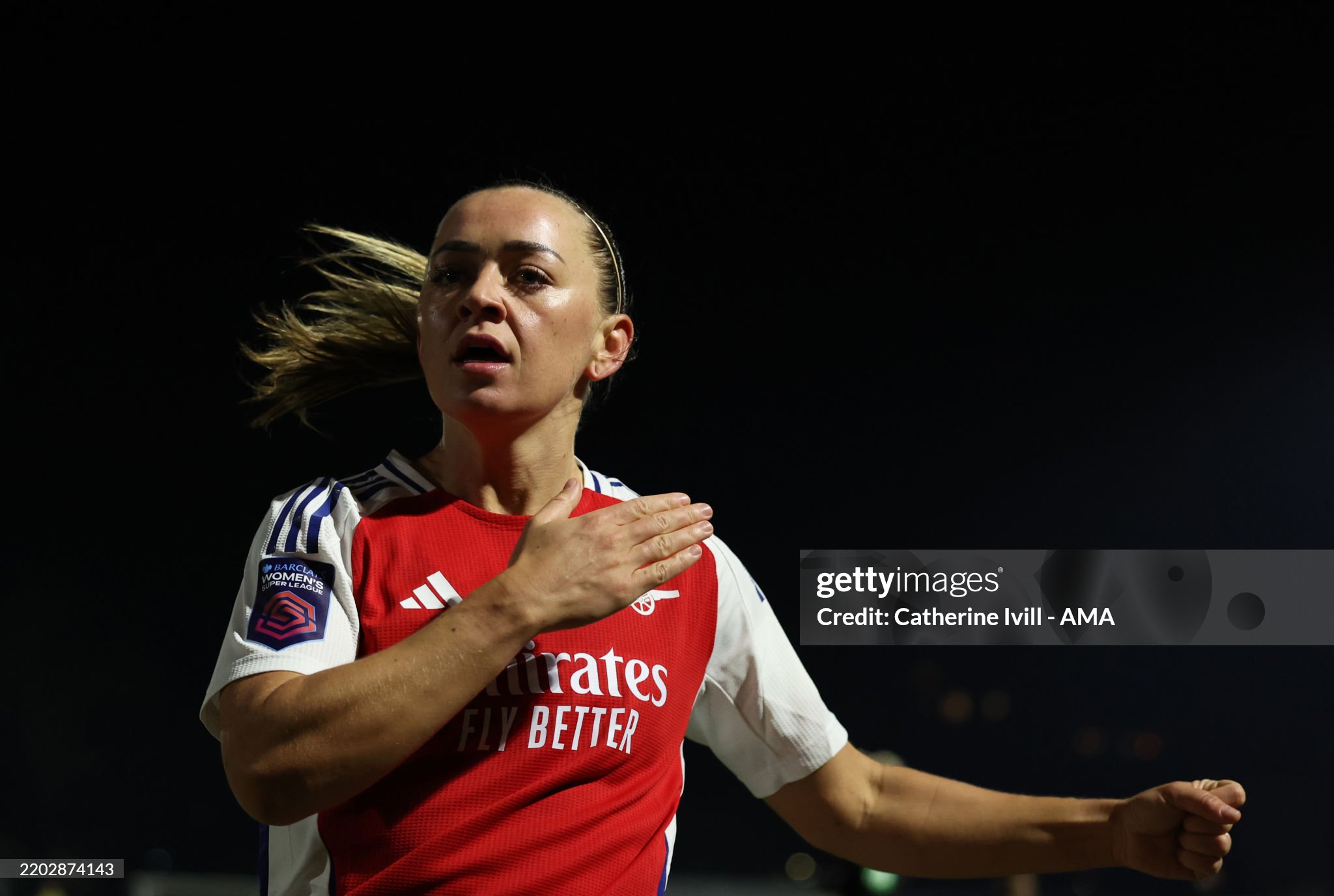
Katie McCabe
Take Arsenal’s Katie McCabe, for example. Alongside teammate Mariona Caldentey, she leads the WSL in goal and shot creations, with both players tallying 78. In average goal/shot creations per 90 minutes, McCabe ranks fourth, trailing only Lauren James and Lauren Hemp. However, it’s important to note that this metric can be skewed, as injuries to James and Hemp result in a higher per-90 average despite their total creation numbers being lower.
She tops the chart for big chances created in the WSL, which Opta defines as ‘a situation where a player should reasonably score.’ McCabe leads with 15 chances, seven more than Mariona Caldentey, who sits in second place with eight.
The defender has the highest amount of crosses in the league, and by a far margin. McCabe has placed a cross inside of the area on 105 occasions, with her closest opponent being Liverpool’s Marie Höbinger with just 73.
McCabe is the primary case study of the evolution of the fullback position across both the women’s and men’s game. Asked to play high in the channel and attack with aggression, McCabe’s attacking prowess sums up exactly what it means to be an attacking fullback.
Not only this, but Slegers has also been known to ask McCabe to invert into the midfield, another evolved model of fullback that is being utilised in the global game. Arsenal fans will often see this when watching the men’s team, with Mikel Arteta’s preference to have either Oleksandr Zinchenko or Jurrien Timber invert into the midfield pivot when the side is in possession.
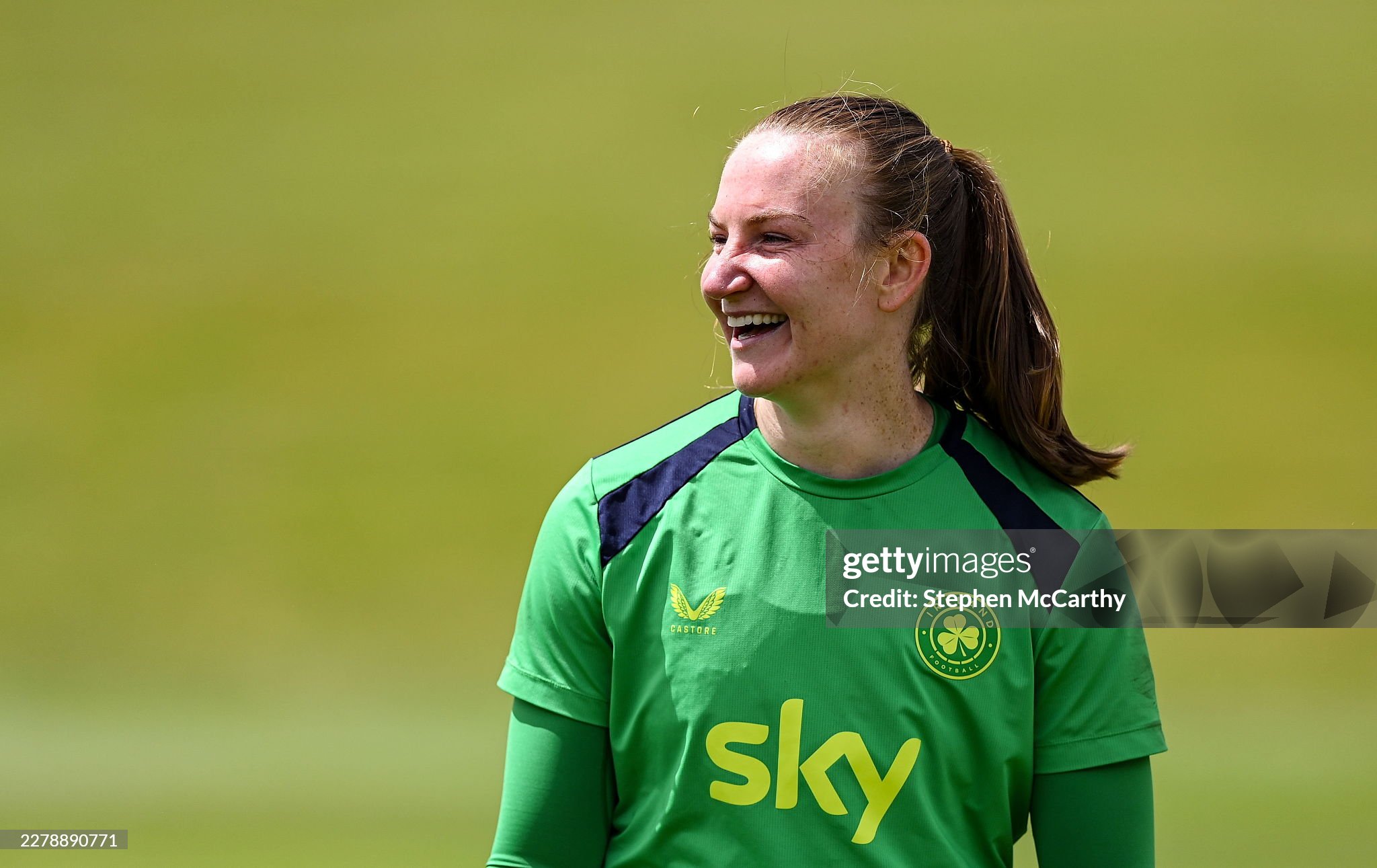
Sara Holmgaard
Everton’s Sara Holmgaard could well be in the race to be named in the WSL Team of the Season. The Danish fullback has starred for the Toffees, administering a string of strong performances over recent months.
Where McCabe is a prime example of an attacking fullback, Holmgaard epitomises a similar style. Ranked against players in the same position across the Top 9 leagues in Women’s Football (1646 mins+), Holmgaard is the tall tree in the forest of her peers.
While her expected non-penalty goals ranks at just 59% amongst her peers, her non-penalty goal completions rank in the top 4% of all fullbacks in the top 9 leagues. This means that Holmgaard is exceeding her XG from the left-back position.
Not only this, but the defender is ranked in the top 6% for assists amongst fullbacks in the top 9 leagues, a statistic currently led by Lyon’s Sofie Svava.
Her stellar performance in Everton’s 3-0 victory over Crystal Palace stole the spotlight, as she netted one goal and provided two assists from the depths of left-back.
But unlike the exhilarating Trent Alexander-Arnold who lights up the channel and inverts into the six with attacking prowess, Holmgaard can actually defend!
At 174 cm, Holmgaard’s aerial strength is often underrated. The 26-year-old excels in the air, ranking in the top 4% for aerial duels won among fullbacks in the same comparison group. She also dominates the clearance statistic, clearing 94% of her defensive counterparts in that category.
The Fullback Revolution
Whilst McCabe and Holmgaard star in the WSL, they aren’t the only fullbacks displaying attacking brilliance on the English stage. Manchester United’s Jayde Riviere has raised her levels this season, working in tandem with Celin Bizet to light up the right flank.
Tottenham young gun Ella Morris has starred over recent months for the club, showcasing her versatile grit up and down the channel. Kerstin Casparij plays a similar role for Manchester City, while Brighton’s Rachel McLauchlan has racked up two assists in the last two games for the Seagulls.
In the wider pool of global football, the fullbacks are just as impressive. Barcelona’s Ona Batlle remains to be one of the most exciting examples of an attacking fullback, registering in the top 2% of the aforementioned pool for both assists and progressive carries. Not only this, but Batlle registers a 0.27 expected goals per 90 minutes- an incredibly impressive statistic for a defender.
AS Roma’s Frederikke Thøgersen is as versatile as they come, utilising the right channel in the fullback and wingback roles. Bayern Munich’s Giulia Gwinn is another one to watch, alongside club teammate Carolin Simon who has registered three goals and three assists in the Frauen Bundesliga this season from the depths of right-back.
As the women’s game continues to develop into it’s own exciting monolith, the evolution of the fullback perfectly encapsulates what we all love most about football.