
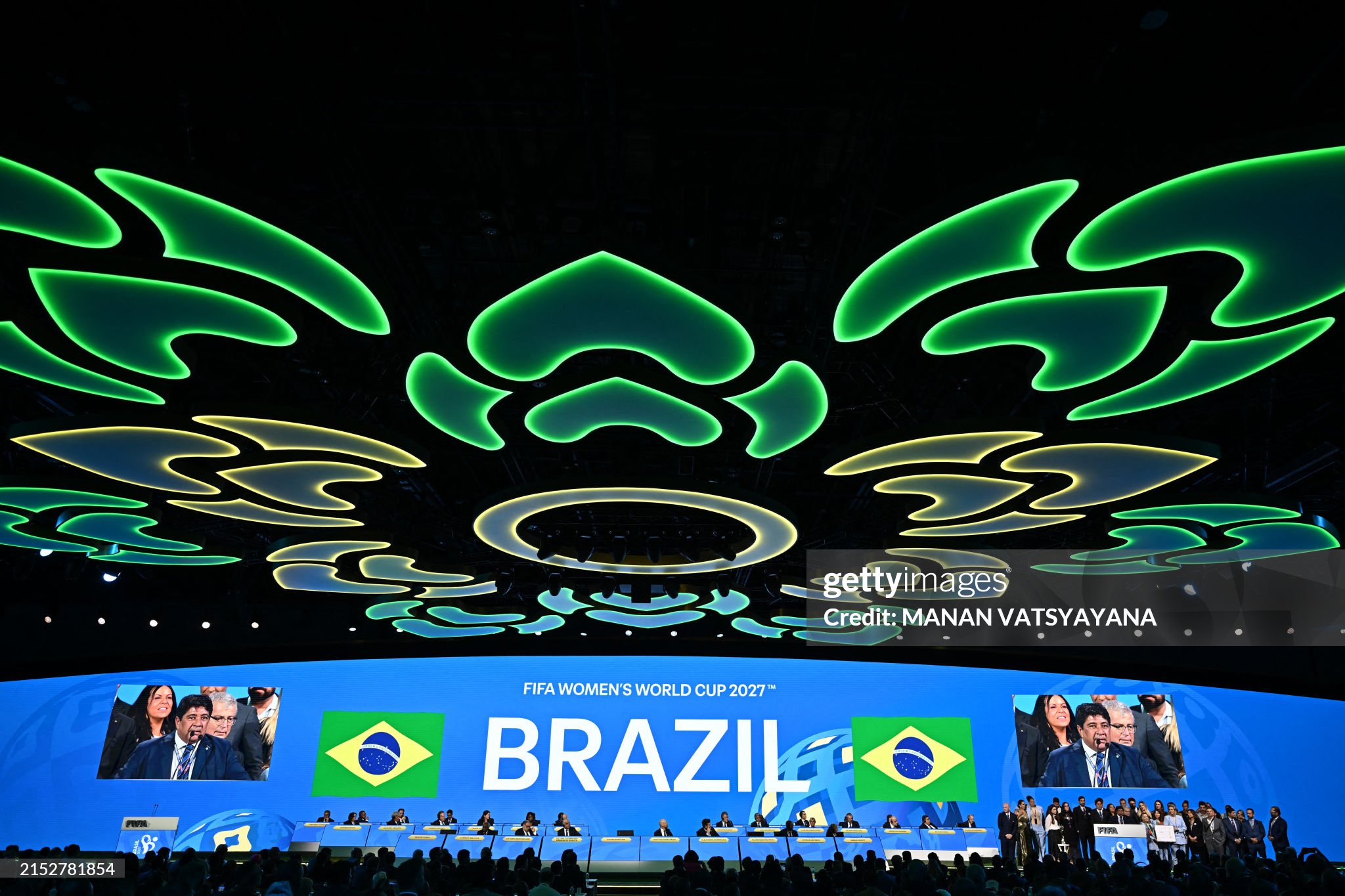
The FIFA Women’s World Cup in Brazil is set to be a show stopper. Marta’s last dance, Sarina Wiegman’s Lionesses revenge tour and Emma Hayes’ first shot at the World Cup. These are just a few of the myriad of storylines likely to get tongues wagging in 2027 but what if the competition had been even bigger?
In 2026 the men’s World Cup will be the first senior World Cup to feature 48 teams, expanded from the previous amount of 32. It is an historic moment and a step into the unknown for FIFA’s flagship competition.
The men’s edition first included 32 teams in 1998 only 26 years later was the competition then expanded. In stark contract, only ten years ago the Women’s World Cup included just 24 teams, but by 2031 that number is set to be doubled as FIFA have confirmed the expansion in the women’s edition too. There are natural concerns that this expansion is happening too soon.
There are positives and negatives of an expansion, the 2023 Women’s World Cup was an expansion and the eight debutants gave fans some of the best storylines in the competition. The Women’s World Cup has still only featured 44 nations in its entire history, and if FIFA hope to encourage investment then expansion seems a smart call. One that encourages associations to invest more in the women’s game.
On the other hand the concern is in part one sided score-lines will bring the competition’s competitiveness into disrepute, see also Reims in 2019: USA 13-0 Thailand. That is added to the fact that success and qualification for a FIFA Women’s World Cup does not guarantee investment.
With the men’s 48 team competition taking shape in the past few weeks in dramatic fashion, The Halfway Line has imagined what a 48 team competition could have looked like should it have been implemented in this World Cup cycle.
Please note this is a hypothetical projection with the methods of qualification based on both the current qualification, historic qualification and qualification for the men’s edition this past year.
The projected results are based on historic results, the current quality of each side and as well as a healthy dose of the glorious chaos so often associated with qualification. We’ll go through how every confederation’s qualification may have looked, projecting qualifiers from each as well as the intercontinental play offs. We will cap it all off by completing the draw for a 48 team FIFA Women’s World Cup.
It is worth noting that the only aspect of qualifying that has been officially confirmed in 2031 is the amount of teams that will qualify.
UEFA (16 spots)
UEFA’s qualification is made quite simple because we can follow the exact system used for UEFA EURO 2025. This is because the 16 spots European teams have been allocated to qualify for the World Cup is the same number that qualified for the tournament in Switzerland. Since the qualification groups have already been drawn we will work them out from there.
There were few surprises in League A, with the top two in each group qualifying for the competition directly. That sees Sweden, Italy, France, Netherlands, Spain, England, Germany and Norway punch their tickets to the World Cup in Brazil.
As Switzerland do not automatically qualify for the World Cup as hosts as they did in the European Championships in 2025, all the League A sides that finished third and fourth are seeded in the play offs.
Once again there are two paths in the play offs, the first sees the seeded League A sides face the top six sides in League C alongside the two best second placed finishers in League C. The second path pits League B’s top two sides in each group against the bottom two sides from each group:
Round 1: Path 1
Seeded:
Denmark
Serbia
Poland
Republic of Ireland
Iceland
Ukraine
Austria
Slovenia
Unseeded:
Bosnia and Herzegovina
Croatia
Hungary
Greece
Romania
Belarus
Kosovo
Cyprus
Draw (winners in bold)
Republic of Ireland vs Belarus
Denmark vs Cyprus
Ukraine vs Hungary
Austria vs Kosovo
Slovenia vs Bosnia and Herzegovina
Serbia vs Croatia
Poland vs Greece
Iceland vs Romania
Round 1: Path 2
Seeded:
Belgium
Finland
Switzerland
Czech Republic
Wales
Northern Ireland
Portugal
Scotland
Unseeded:
Albania
Montenegro
Turkey
Malta
Slovakia
Latvia
Israel
Luxembourg
Draw (winners in bold)
Czechia vs Luxembourg
Switzerland vs Malta
Wales vs Albania
Belgium vs Slovakia
Northern Ireland vs Turkey
Portugal vs Montenegro
Finland vs Latvia
Scotland vs Israel
After the first round both paths collide with a place at the finals on the line, those from path one are seeded while those from path two are unseeded.
Draw (winners in bold)
Iceland vs Portugal
Austria vs Czechia
Ukraine vs Switzerland
Slovenia vs Finland
Serbia vs Scotland
Republic of Ireland vs Wales
Poland vs Belgium
Denmark vs Northern Ireland
Poland, Austria and Slovenia qualify for their first World Cup, while Denmark, Republic of Ireland, Portugal and Switzerland complete back to back World Cup qualifications. Scotland also return to the world stage having made their debut in 2019 to complete the line up from Europe.
CAF (9 spots; 1 IC play off spot)
CAF will likely continue to use the Women’s African Cup Of Nations (WAFCON) to determine their continental qualifiers for the World Cup. In line with the men’s edition CAF will get nine direct slots and one further place for a side to compete at the intercontinental play offs.
The expanded format of 16 teams at WAFCON means that the top two from each group qualify automatically for the World Cup. Each of the third placed sides from each group face each other in a short repechage, in a semi final format. In the final, the victor qualifies automatically while the runner up heads to the intercontinental play offs.
With the WAFCON qualifiers already set, all we need to do is sort the sides into pots by FIFA World Ranking and make the draw. The sides in pot four are those who initially did not qualify for WAFCON but were given a reprieve due to being the highest ranked non-qualifiers after CAF elected to expand the tournament to 16 nations.
Pot One
Morocco (64) H
Nigeria (36)
South Africa (54)
Zambia (65)
Pot Two
Ghana (67)
Algeria (80)
Senegal (81)
Cape Verde (126)
Pot Three
Tanzania (131)
Burkina Faso (134)
Kenya (140)
Malawi (155)
Pot Four (Lucky losers)
Cameroon (66)
Ivory Coast (71)
Mali (79)
Egypt (95)
WAFCON 2026 Draw
| Group A |
| Morocco |
| Ghana |
| Kenya |
| Egypt |
| Group B |
| Nigeria |
| Algeria |
| Burkina Faso |
| Cameroon |
| Group C |
| South Africa |
| Cape Verde |
| Tanzania |
| Ivory Coast |
| Group D |
| Zambia |
| Senegal |
| Malawi |
| Mali |
Morocco, Ghana, Nigeria, Algeria, South Africa, Ivory Coast, Zambia and Senegal all qualify automatically after finishing in the top two of each group.
Ghana make their first appearance at the World Cup since 2007, while Ivory Coast return for the first time since 2015. Nigeria continue their exemplary attendance record at World Cups by qualifying once again while Bayana Bayana make it three consecutive qualifications. Zambia and Morocco return after making their debuts at the 2023 edition, while Algeria and Senegal make their bow on the world stage.
Kenya, Cameroon, Tanzania and Mali all advance to the repechage after finishing third in their respective groups.
Semi final repechage (winners in bold)
Tanzania vs Mali
Cameroon vs Kenya
Final (winner in bold)
Tanzania vs Kenya
Tanzania advance to the World Cup for the very first time, fulfilling the promise of the side that famously beat France at the Under 17 World Cup in 2022. Giant killers Kenya have to settle for a spot in the intercontinental play offs.
AFC (8 spots; 1 IC play off spot)
For a 48 team competition Asia’s confederation is given eight direct slots and one intercontinental play off slot. As the Asia Cup kicks off this year, the competition in Australia is used to determine the qualifiers.
The top two in each group qualify automatically for the World Cup with the two third placed sides with the best records joining them. The side to finish third with the worst record of the three advances to the intercontinental play offs.
| Group A |
| Australia |
| South Korea |
| Iran |
| Philippines |
| Group B |
| North Korea |
| China |
| Bangladesh |
| Uzbekistan |
| Group C |
| Japan |
| Vietnam |
| Chinese Taipei |
| India |
Australia, South Korea, China, Japan and Vietnam return to the World Cup after all featuring in 2023. Chinese Taipei put the double penalty shoot out disappointment of qualification in 2023 behind them to return to their first World Cup since the very first edition in 1991.
North Korea return to the World Cup for the first time since they were disqualified from the competition in 2011, banned in 2015, failed to qualify in 2019 and didn’t enter qualifying in 2023. Uzbekistan secure an historic qualification to the tournament, meaning that both their men’s and women’s sides make their World Cup debuts in consecutive years. Philippines advance to the intercontinental play offs.
OFC (1 spot; 1 IC play off spot)
The Oceanic qualifying would likely remain the same as it is for a 32 team tournament. Initially the four lowest ranked OFC sides in the world rankings face each other in a mini tournament. The winner of the mini tournament joins the other seven Oceanic nations in two groups of four, with the top two in each group advancing to the semi final. The winners of each semi final face off in the final. The winner of the final qualifies directly for the World Cup and the defeated finalist advances to the intercontinental play offs.
Mini tournament
Semi final (winners in bold)
Tahiti vs Cook Islands
Tonga vs American Samoa
Final
Cook Islands vs American Samoa
The qualifying pots look a little different for this qualifying tournament. There are three pots. Pot 1 and pot 3 both include two sides with one going into each group. Pot 2 includes four sides with two entering each group. Both groups are hosted by the Solomon Islands and Fiji.
Qualifying Pots
Pot One
New Zealand (33)
Papua New Guinea (60)
Pot Two
Solomon Islands (73)
Fiji (78)
Samoa (86)
Vanuatu (100)
Pot Three
New Caledonia (101)
American Samoa (153)
Qualifying Draw
| Group A |
| Papua New Guinea |
| Fiji (H) |
| Vanuatu |
| New Caledonia |
| Group B |
| New Zealand |
| Solomon Islands (H) |
| Samoa |
| American Samoa |
The semi finals and final are hosted by top seeded New Zealand.
Semi finals (winners in bold)
Solomon Islands vs Papua New Guinea
New Zealand (H) vs Fiji
Final
Solomon Islands vs New Zealand
New Zealand secure their spot at the World Cup in Brazil as expected. The Solomon Islands, who won the OFC Women’s Nations Cup in 2025 pull off a few surprises and pip Papua New Guinea and Fiji to the intercontinental play off spot.
CONMEBOL (5 spots – 1 IC play off spot)
The inaugural CONMEBOL Women’s Nations League has replaced the Copa America Femenina in deciding qualification for the World Cup and has already kicked off. For our purposes we will use that same format. The top five sides qualify automatically while the sixth placed side heads to the intercontinental play offs. Brazil as hosts have already qualified and are not included in this process.
Standings (qualified nations in bold)
| Colombia |
| Argentina |
| Venezuela |
| Paraguay |
| Uruguay |
| Chile |
| Ecuador |
| Peru |
| Bolivia |
Colombia and Argentina qualify automatically for the World Cup as consistently the two best sides in the region behind Brazil. Paraguay and Venezuela qualify for the World Cup for the first time with talents like Claudia Martínez and Deyna Castellanos getting the opportunity to showcase their immense talent on a world stage.
The very first winners of the men’s edition in 1930, Uruguay finally make their bow on the women’s stage almost 100 years later. Chile are confined to the intercontinental play offs once again.
CONCACAF (6 spots – 2 IC play off spots)
The CONCACAF W Championship continues to determine the qualifiers from the final confederation. Qualifying is underway for the tournament that Canada and United States have already qualified for on the basis of their world ranking last year. In qualifying, six groups are drawn with the six group winners each advancing to the CONCACAF W Championship.
Qualifying Groups (group winners in bold)
| Group A |
| Mexico |
| U.S. Virgin Islands |
| Puerto Rico |
| Saint Vincent and the Grenadines |
| Saint Lucia |
| Group B |
| Jamaica |
| Nicaragua |
| Guyana |
| Antigua and Barbuda |
| Dominica |
| Group C |
| Costa Rica |
| Bermuda |
| Guatemala |
| Grenada |
| Cayman Islands |
| Group D |
| Suriname |
| Haiti |
| Dominican Republic |
| Belize |
| Anguilla |
| Group E |
| Aruba |
| Panama |
| Cuba |
| Curaçao |
| Saint Kitts and Nevis |
| Group F |
| Trinidad and Tobago |
| El Salvador |
| Honduras |
| Barbados |
At the CONCACAF W Championship the top three in each group qualify for the World Cup automatically while the bottom sides proceed to the intercontinental play offs.
CONCACAF W Championship
Pot One
USA
Canada
Pot Two
Mexico
Jamaica
Pot Three
Costa Rica
Haiti
Pot Four
Panama
Trinidad and Tobago
CONCACAF W Championship Draw
| Group A |
| Canada |
| Mexico |
| Haiti |
| Panama |
| Group B |
| USA |
| Jamaica |
| Costa Rica |
| Trinidad and Tobago |
Canada, Mexico, Haiti, USA, Jamaica and Costa Rica qualify directly for the World Cup while Panama and Trinidad and Tobago advance to the intercontinental play offs.
FIFA Women’s World Cup Intercontinental Play Offs
The two sides ranked highest in the FIFA World rankings that reached the intercontinental play offs are seeded, meaning they have an automatic place in the final. They will await the winners of the semi finals which feature ties that pit the third and sixth ranked sides against each other alongside the fourth and fifth ranked sides.
Seeded
Philippines (39)
Chile (45)
Unseeded
Panama (57)
Solomon Islands (73)
Trinidad and Tobago (75)
Kenya (140)
Semi finals (winners in bold)
Panama vs Kenya
Solomon Islands vs Trinidad and Tobago
Finals
Philippines vs Kenya
Chile vs Solomon Islands
Philippines and the Solomon Islands complete the World Cup line up after Kenya’s giant killing streak ends and Chile fall at the final hurdle for the second time in a row.

The Women’s World Cup 2027 with 48 teams
As in the men’s competition there are four pots with 12 teams in each pot ordered by FIFA World ranking. Hosts Brazil are automatically placed in pot one and in Group A.
As for some draw house keeping, two sides from the same Confederation cannot be placed in the same group except those from UEFA where a maximum of two can be in the same group. Pots are based on the current FIFA Women’s World rankings, both intercontinental play off winners enter at pot four regardless of their FIFA ranking.
Pot One
- Brazil (hosts)
- Spain
- USA
- Sweden
- England
- Germany
- France
- Japan
- Canada
- North Korea
- Netherlands
- Italy
Pot Two
- Norway
- Denmark
- Australia
- China
- Colombia
- Austria
- South Korea
- Portugal
- Switzerland
- Scotland
- Poland
- Ireland
Pot Three
- Mexico
- Argentina
- New Zealand
- Nigeria
- Vietnam
- Slovenia
- Jamaica
- Paraguay
- Chinese Taipei
- Costa Rica
- Venezuela
- Haiti
Pot Four
- Uzbekistan
- South Africa
- Uruguay
- Morocco
- Zambia
- Ghana
- Ivory Coast
- Algeria
- Senegal
- Tanzania
- Philippines
- Solomon Islands
FIFA Women’s World Cup draw with 48 teams
| Group A |
| Brazil |
| Portugal |
| Slovenia |
| Solomon Islands |
| Group B |
| Germany |
| Scotland |
| Paraguay |
| South Africa |
| Group C |
| Spain |
| China |
| Nigeria |
| Uruguay |
| Group D |
| France |
| Poland |
| Jamaica |
| Morocco |
| Group E |
| USA |
| Colombia |
| New Zealand |
| Uzbekistan |
| Group F |
| Sweden |
| South Korea |
| Venezuela |
| Zambia |
| Group G |
| England |
| Norway |
| Mexico |
| Philippines |
| Group I |
| Canada |
| Austria |
| Vietnam |
| Senegal |
| Group J |
| Japan |
| Denmark |
| Costa Rica |
| Algeria |
| Group K |
| North Korea |
| Ireland |
| Argentina |
| Ghana |
| Group L |
| Italy |
| Australia |
| Haiti |
| Tanzania |
With the draw complete, our 48 team World Cup has taken shape, and the opening match is a corker between Brazil and Portugal. The way the group stage works, the top two sides qualify for the round of 32 while the eight sides finishing third with the best records qualify to join them.
The expansion of the World Cup is inevitable and before we see the World Cup in Brazil with 32 teams it is hard to say if a further 16 nations would have improved it. That being said, 11 teams making their debuts in the competition would make for intriguing viewing, even if there were lopsided score lines.
The men’s World Cup in 2026 will give us an indication of how successful the format is. Given the increasing interest in women’s football and its unrecognisable growth, even since the last 24 team World Cup in 2019, six years feels like a long time. The fastest growing women’s sport in the world shows no signs of slowing down.