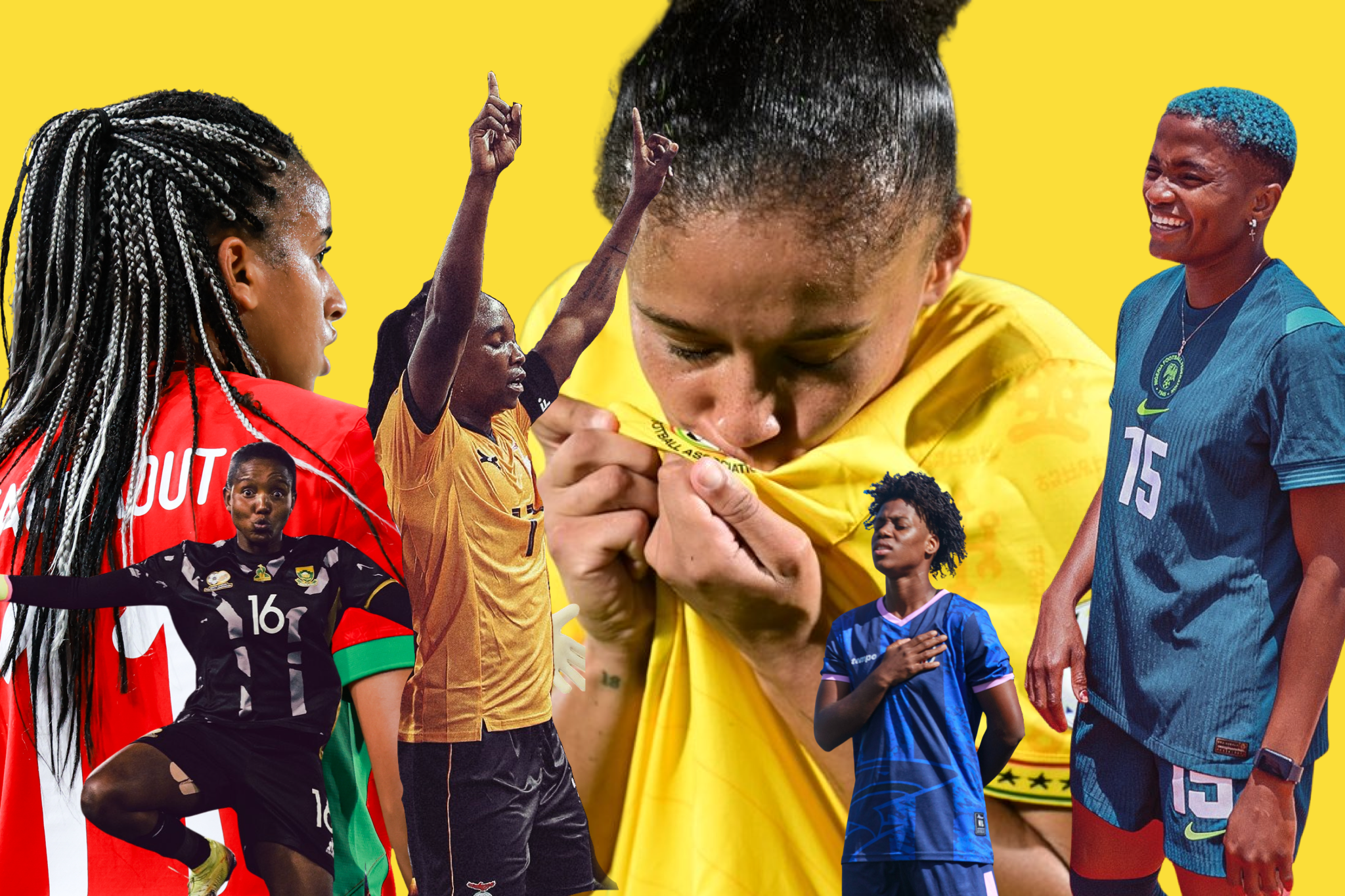
WAFCON 2026 starts on Sunday and here at The Halfway Line we’re bringing you all the information you need ahead of kick off in Rabat.
WAFCON 2024 treated us to one of the best major tournament finals in recent memory as Nigeria came from two goals down to topple hosts Morocco and claim their tenth WAFCON title. Since then the stakes have only got higher with this year’s WAFCON champions now receiving $2 million, double the 2024 prize pot. And this time, FIFA Women’s World Cup qualification is on the line.
Despite the tournament being postponed earlier in the year, we are finally ready to go. After a dramatic qualifying campaign, the stage is set for an expanded version of the competition with the four top ranked sides that failed to qualify offered a reprieve. Days out from kick off there is one question on everyone’s lips… Can anyone stop Nigeria?

Will it be third time’s a charm for the hosts?
Morocco have hosted the past two WAFCONs and on each occasion they made the final, and each time they lost. They will host the competition again this summer with former Spain head coach Jorge Vilda at the helm. Moroccan football has come a long way in recent years, the nation boast the best women’s club side on the continent in AS FAR with back to back CAF inter club player of the year Sanaâ Mssoudy, a star for club and country. The Atlas Lionesses also have Ghizlane Chebbak, Player of the Tournament in 2022 and outright top goal scorer in the 2024 edition from midfield. Chebbak scored a goal of the tournament contender in the final, a blistering effort fired past Chiamaka Nnadozie.
Morocco face a derby with Algeria in the groups, which will be a good early test. There is no small amount of intrigue in the tie, with longstanding political tensions between the two nations exacerbated last summer. CAF, African football’s governing body, opened an investigation after Algerian officials used black tape to mask any mention of the hosts and certain tournament sponsors with Morocco in the title during televised media commitments for their staff and players.
Algeria’s strength is undoubtedly in defence, the Fennecs did not concede a goal in WAFCON 2024, making the quarter finals for the first time. Chloé N’Gazi kept four clean sheets in goal but they struggled at the other end only netting once. Despite scoring their only goal at the last WAFCON and being joint top scorer in qualifying, star player Ghoutia Karchouni was omitted from the final squad. Fans will look to the talents of Mélissa Bethi to step up at this competition in Karchouni’s absence. Recent victories over Cameroon in qualifying and Zambia in their final warm up game for the tournament have helped enthuse the fanbase.
It’s a tricky group for Morocco with Senegal and Kenya also joining them in Group A, but Morocco have been here before. In 2024 they topped a group with both Zambia and Senegal. The Atlas Lionesses may hope for simpler passage at the tournament this time, they needed penalties to scrape past Ghana in the semi final. Morocco’s loss in the final, throwing away a 2-0 lead, will have been particularly painful. It was a defeat that raised question marks over the tactical nous of the head coach. Anything less than a WAFCON title this time around and Vilda’s days as head coach of this ambitious football nation would likely be numbered.

Can anyone stop Nigeria?
There have been thirteen WAFCONs, Nigeria have never failed to make at least the semi final, and have won all but three titles.
Rasheedat Ajibade will be key to their bid for an eleventh title, joint top scorer in 2022, the PSG forward won Player of the Tournament in 2025. Ajibade has smarts off the pitch too with two degrees, one in accounting and a second in sports psychology. Her main partner in crime last campaign was Esther Okoronkwo, player of the match in last year’s final she has only gone from strength to strength since, winning the inaugural Canadian Super League with Toronto FC.
Between the posts the Super Falcons have one of the best shot stoppers in world football in Brighton goalkeeper Chiamaka Nnadozie. Nnadozie didn’t concede a single goal from open play until the final of the last WAFCON. In the Barclays Women’s Super League last term Nnadozie had the highest save percentage in the division at 74.7 percent.
In the dugout Nigeria have Justine Magadu, nominated for the Ballon d’Or Women’s Team Coach of the Year last term and for good reason. After Nigeria’s joint worst showing at a WAFCON in 2022 there was some concern their dominant grasp could be slipping. Even that the dominant mantel might have been passed to Morocco as it has been in the men’s game. That exceptional slice of management in the final to mastermind the comeback ensured that everyone was given a timely reminder exactly where Nigeria sit in the African Women’s football hierarchy. One of Magadu’s biggest calls during last year’s edition was using legend Asisat Oshoala sparingly, and it proved the right call but if it goes wrong this time many will question her continued exclusion.
Nigeria now have ten stars surrounding the badge to represent their ten WAFCON titles. It would be a brave soul that bets against the Super Falcons donning an eleventh in Brazil next year.

High stakes
The key difference between this year’s WAFCON and that of the previous edition last summer is that this will determine the four CAF sides that will automatically qualify for the FIFA Women’s World Cup in Brazil next year. The equation is quite simple, make the semi finals and you’ll book your ticket to Brazil. Lose in the quarter finals and you’ll face off against other defeated quarter finalists for two places in the inter-continental play offs.
Neither of the African sides in the inter-continental play offs for the World Cup in 2023 qualified, so that provides all the more incentive to qualify automatically. It is difficult to look past Nigeria, South Africa and Morocco as automatic qualifiers, the last place could be interesting however.
If the draw goes to seeding, it would see top seeded Ghana, who came third in the competition last year face Zambia who were third four years ago, qualifying for the 2023 World Cup in the process. Zambia, who stunningly beat Nigeria in the third place play off in 2022, were soundly beaten by the same opponents in the quarter final last year, 5-0 in Casablanca. Zambia boast the attacking talents of Barbra Banda and Rachel Kundunanji but it is their defence that garners concern. The Copper Queens have not made the strides forward that many would have hoped for after the appointment of Nora Häuptle as head coach in 2025. Only to add to the intrigue, before Zambia, Häuptle was managing, you guessed it, Ghana.
The Halfway Line Verdict
FIFA Women’s World Cup 2027 automatic qualifiers: Nigeria, Morocco, Ghana, South Africa
Inter continental play off spots: Zambia, Tanzania

Dark horses
Before a major tournament, picking a dark horse is every supporter’s favourite past time. Ahead of WAFCON 2026 we’re splitting this one into two categories: one, dark horses to win the tournament and two, dark horses to surprise a few. Three time WAFCON finalists Ghana are very much in the former category.
The Black Queens enjoyed their best tournament since a third place finish in 2016 in 2025. Former Racing Louisville head coach Kim Björkegren was a surprise appointment just six months before the previous competition but he has helped usher in welcome enthusiasm for Ghana. Ghana only missed out on a place in the final on penalties losing to hosts Morocco with youngster Comfort Yeboah suffering the misfortune of missing the fatal penalty kick. Yeboah is however an exceptional defensive footballer with huge talent and will be a key part of the team this time around. Nottingham Forest taliswoman Chantelle Boye-Hlorkah was a crucial addition to the squad prior to WAFCON 2024 and she will be key to any potential success for Ghana. Doris Boaduwaa is another name to lookout for, the 23-year-old nabbed a hat trick in Ghana’s final warm up game, a 4-0 victory over Malawi. The Black Queens had three penalty shootouts in the 2025 edition, they will hope to get their business done sooner this time round.
Shifting over to those who might surprise a few. Tanzania pulled up a few trees in the last edition of WAFCON when they almost beat then reigning champions South Africa. With 20 minutes to play they led Bayana Bayana by a goal but would eventually draw, an excellent result but defeats to Ghana and Mali meant they did not advance. It was a particularly challenging group with two of the eventual semi finalists. This generation of Tanzanian talent has shown huge promise for a while now. Many of the squad were part of the team that made the quarter finals of the Under 17s FIFA Women’s World Cup in 2022, famously beating France along the way. This time at WAFCON the Twiga Stars have a more manageable group, with two sides that failed to qualify for the tournament at first. Their final warm up game gave cause for optimism, narrowly losing 2-1 to Nigeria, only defeated by an 89th minute Esther Okoronwko winner.
Kenya are perhaps African football’s most prolific giant killers in recent times. In February 2025 Tunisia learnt that the hard way. Tunisia were the highest ranked side in the first round of qualifiers for WAFCON 2026 but they were eliminated thanks to a 1-0 two legged victory for the Harambee Starlets. At the same stage a couple of years ago Kenya knocked out Cameroon, condemning the Indomitable Lionesses to their first ever failed WAFCON qualification campaign. Kenya came desperately close to qualifying in 2024, with Botswana pipping them by a goal in the final qualifying round. Victory over Gambia ensured that they now prepare for only their second ever WAFCON. Watch out for Lilian Awuor, the goalkeeper is their number one and the only Kenyan player to remain in the squad from their first WAFCON outing back in 2016. She was pivotal in Kenya’s victory over Tunisia saving two penalties in the second leg. They’re in an incredibly difficult group with two quarter finalists and one finalist from the 2024 edition, but they will take solace in their ability to defy the odds. Midfielder Mwanalima Adam Jereko will be essential to their chances, the former Kansas City Current midfielder now plies her trade in Denmark at HB Køge. They will open their campaign against the hosts on the opening day.

WAFCON Debutants
Malawi and Cape Verde are the only two nations to make their debuts at this WAFCON. Malawi have a squad headlined by two of the biggest stars in world football, Kansas City Current’s Temwa Chawinga and OL Lyonnes’ Tabitha Chawinga. The sisters have already made history with their nation but they will be hungry for more this summer. Ambitions should be somewhat tempered by the fact that Malawi beat beat the second lowest ranked nation left in qualifying in the final round, they themselves were the lowest ranked. The scale of the Malawi achievement comes into focus when you consider they did not even enter a team into qualifying for WAFCON in 2024. Temwa Chawinga could make a good case for being the best attacker in world football, she was the NWSL Most Valuable Player in 2025, much of their hopes will be on her shoulders. They will hope a 4-0 defeat to Ghana in their final warm up match was more indicative of Ghana’s quality than their weaknesses.
Cape Verde stole hearts at the men’s World Cup this summer, now it is their women’s side who take centre stage. Perhaps the biggest shock in the final stage of qualifying was Cape Verde’s comeback victory against 2024 quarter finalists Mali. Defeated 1-0 at home in the first leg, Cape Verde travelled to Mali with a mountain to climb, but within 24 minutes they’d stunned their hosts and were 3-0 up. Mali fought back but to no avail and a 4-2 victory secured the Blue Sharks’ passage to WAFCON 2026. Cape Verde might have considered themselves in the twilight zone when Mali popped up in their WAFCON group having been given a reprieve with the expanded format. Silvéria Nédio’s side will know that they can beat Mali and that should give them hope. Varsenia da Luz will be pivotal, she has been captain of the side since 2020 and has played for the Blue Sharks since their first international which was as recent as 2018. Similarly to their fellow debutants, they will hope heavy warm up defeats to Ivory Coast and Morocco won’t dent their confidence too much.
WAFCON 2026 Groups
| Group A |
| Morocco |
| Algeria |
| Senegal |
| Kenya |
| Group B |
| South Africa |
| Ivory Coast |
| Burkina Faso |
| Tanzania |
| Group C |
| Nigeria |
| Zambia |
| Egypt |
| Malawi |
| Group D |
| Ghana |
| Cameroon |
| Mali |
| Cape Verde |
Where can I watch WAFCON 2026?
Channel 4 will be the broadcaster for the UK and Ireland with every match live on the terrestrial channel. DAZN won the rights to broadcast in a number of other key European territories. Highlights for each game should be uploaded to CAF’s YouTube channel.